
Dr. Gymbro
←

#placebo effect

2 articles
A landscape editorial photograph in a bright, modern gym studio with soft natural light pouring through tall windows. In the foreground, a matte ceramic cup and a small glass jar of plain white powder sit on a light oak bench, with a wooden scoop resting beside them and a few loose grains dusted across the wood. The jar has no label, which hints at mystery without being heavy-handed. Slightly out of focus behind them, a female athlete in a sage green athletic set stands at a barbell, chalked hands gripping the bar, her expression calm and focused. A male cyclist on a stationary bike is blurred in the far background. The palette is warm neutrals: cream, soft sand, pale oak, muted sage, and a touch of terracotta, with gentle golden-hour highlights and soft shadows. The composition follows the rule of thirds, with the cup and jar in the lower left, the athlete on the right, and open negative space in the upper area for headline text. The depth of field is shallow, with a creamy bokeh background. The mood is contemplative, curious, and trendy, like a contemporary health and science magazine cover. Fine film grain, subtle matte finish, clean minimalist styling, and no text or logos.
science research

Valse cafeïne maakte atleten nog harder en sneller

BY DR. GYMBRO ·

Wat als een deel van je pre‑workout boost eigenlijk uit je hoofd komt en niet uit de schep? Een meta‑analyse uit 2026 van 17 onderzoeken toont aan dat een placebo waarvan atleten dachten dat het cafeïne was, toch de sportprestaties verbetert (d = 0.49) bij bankdrukken, fietstijdritten en herhaalde sprints. De effecten waren groter in studies waarin de onderzoekers geblinderd waren en waarin relatief meer vrouwen deelnamen, hoewel het bewijs een lage zekerheid heeft en een hoog risico op bias vertoont. Dit is geen reden om echte cafeïne (3‑6 mg/kg) over te slaan, maar wel een herinnering dat verwachting een prestatievariabele is.
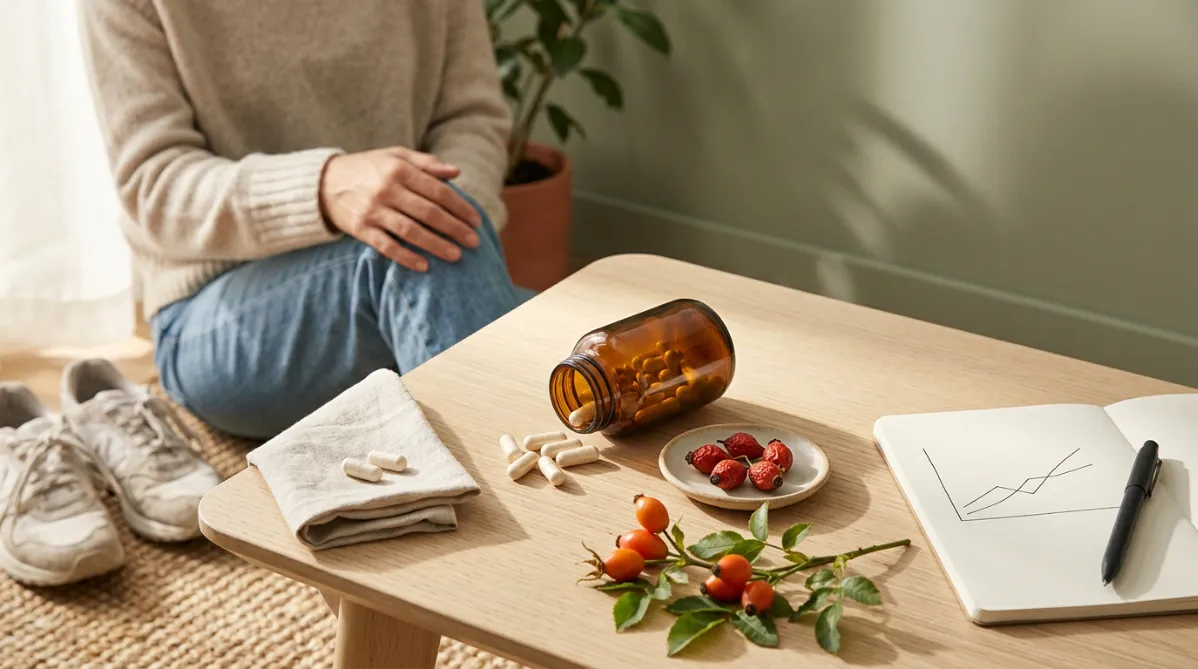
A softly lit editorial still life on a pale oak table, shot from a slightly elevated three-quarter angle in a wide landscape frame. In the center sits an open amber glass supplement bottle on its side, with a small scatter of cream-colored capsules spilling onto the wood. Next to it is a ceramic dish holding a few dried rosehips in deep coral red, and a sprig of fresh rosehip with glossy orange-red berries and green leaves lies across the foreground. On the left, a neat pair of matching white capsules rests on a folded linen napkin, a quiet visual nod to the placebo and treatment groups. Behind them, slightly out of focus, a woman's hands in a soft oatmeal knit sweater rest on a knee in relaxed denim, suggesting everyday movement without showing a face. A pair of worn, clean running shoes sits at the edge of the frame on a woven jute rug. On the right side of the table, a minimalist notebook lies open with a hand-drawn simple line graph, two gently rising lines nearly overlapping, next to a matte black pen. Morning window light streams from the left, casting long, soft shadows and a warm golden glow with gentle highlights on the glass bottle. The background is a muted sage-green wall with a hint of a leafy plant in a terracotta pot, creamy bokeh throughout. The palette is earthy and calm: warm beige, sage, terracotta, coral red, and soft white. The mood is thoughtful, trustworthy, and quietly skeptical, like a modern health and science journal. Clean composition with generous negative space on the upper right for headline overlay. Fine-grain film texture, shallow depth of field, natural color grading, high-end lifestyle magazine photography.
nutrition

Het kniesupplement dat zijn doel miste, maar toch aandacht kreeg

BY DR. GYMBRO ·

Een nieuwe gerandomiseerde studie testte een supplement met gehydrolyseerd kippenkraakbeen en rozenbottel op kniepijn bij 138 actieve volwassenen, maar de primaire uitkomst bleek negatief. Zowel de supplement‑ als de placebogroep verbeterden met meer dan twee punten op een 10‑punts schaal. Exploratieve analyses suggereerden een voordeel voor pijn tijdens dagelijkse activiteiten, vooral bij postmenopauzale vrouwen, maar die signalen komen uit kleine subgroepen en zijn niet doorslaggevend. De studie is geschreven door medewerkers van de bedrijven achter het product. Hieronder lees je wat de data wel en niet laten zien en hoe je erover kunt nadenken.

This page is available in